


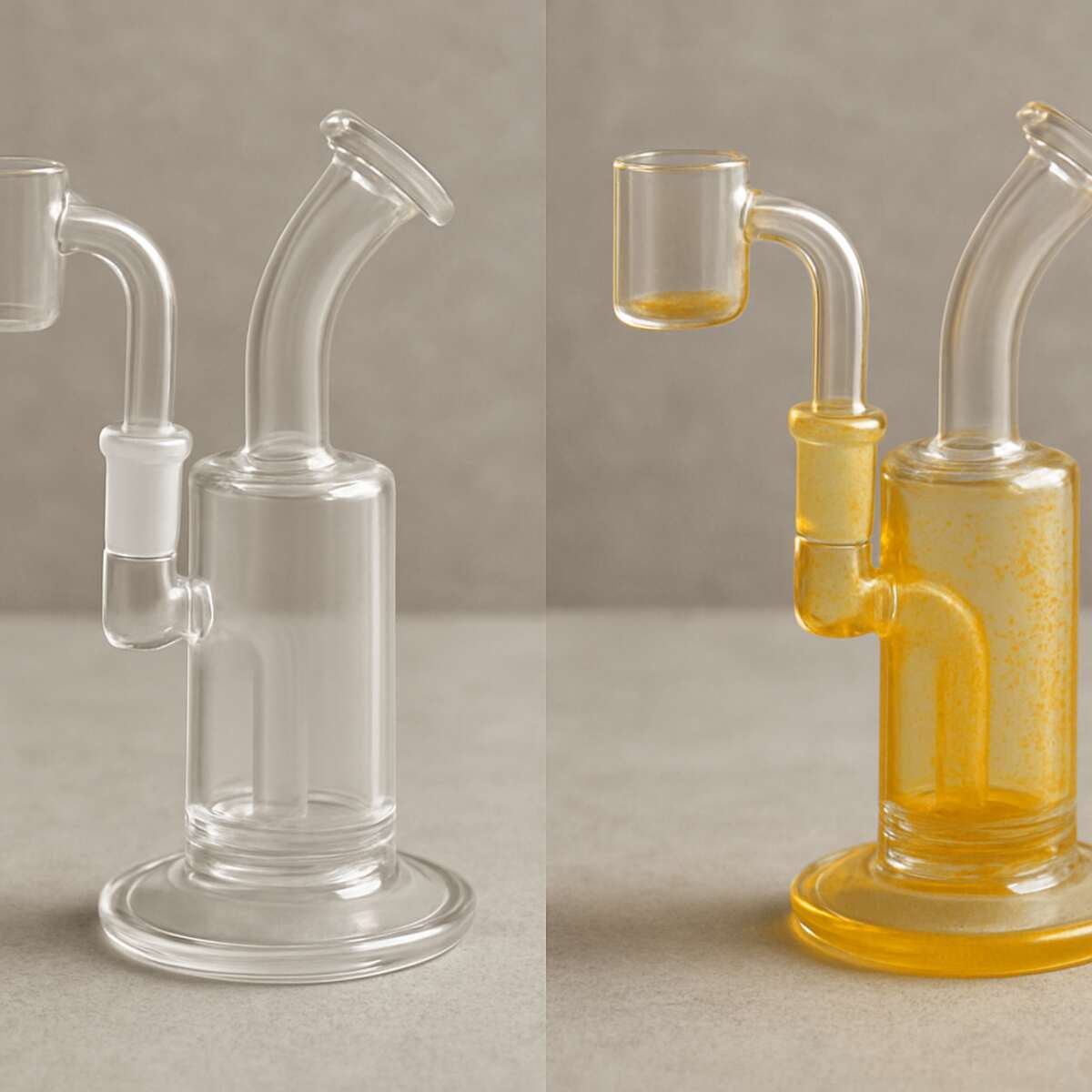
If you have been scrubbing that sticky, amber buildup out of your rig and washing it down the drain, you are literally throwing money away. Unlike the foul-tasting, charred “resin” left behind by smoking dry flower, the golden goo inside your glass is simply vapor that cooled down and recondensed before it could reach your lungs. This material is not trash; it is a partially used product waiting for a second life. Typically the Interesting Info about reclaim catcher.
Consider dab reclaim as a high-potential byproduct. Because the concentrate has already been exposed to high heat, the cannabinoids are fully activated, making this material a powerful tool for efficiency and cost-savings. Experienced enthusiasts know that ignoring this resource is often the biggest leak in a consumer’s budget, especially when fresh supplies run low.
Retrieving this oil does not require advanced laboratory tools. By adopting a zero-waste dabbing approach, you can easily harvest the buildup from your drop-down or banger and repurpose it for intense edibles or a rainy-day session.
The ‘Kitchen Fond’ Analogy: Defining the Sticky Buildup
Every time you take a dab, a miniature physics experiment happens inside your glass. As hot vapor travels through water and hits the cooler glass walls, it naturally drops in temperature. Just like steam on a bathroom mirror turns back into water droplets, your concentrate vapor re-condenses into a sticky, golden oil before it ever reaches your lungs. This buildup signals the mechanical process is working as intended, capturing stray potency that would otherwise vanish.
![A side-by-side comparison showing a clean dab rig and a rig with healthy golden reclaim buildup.]
Think of this residue like the “fond”—those browned, flavorful bits left at the bottom of a pan after searing a steak. In the culinary world, tossing that out is a rookie mistake because it holds concentrated richness perfect for making a sauce. Similarly, the amber-colored goo lining your rig is simply high-quality oil that took a detour. It hasn’t been burned to ash; it has just changed states from solid to vapor and back to liquid. By recognizing this collection as “condensate residue” rather than dirty sludge, you unlock a second serving from your initial investment.
Spotting the difference between useable reclaim and actual dirt is a visual game. High-quality buildup usually looks like maple syrup or dark honey, clinging to the drop-down or the curves of your rig. While it lacks the aromatic punch of fresh terpenes, this “stowaway” oil is potent and fully activated. Before you reach for the rubbing alcohol to scrub it away, understand why this substance is chemically superior to the black tar found in a standard flower bong.
Reclaim vs. Pipe Resin: High-Grade Concentrate vs. Waste
Transitioning from smoking traditional flower to dabbing concentrates requires a shift in how you view glass buildup. In a standard water pipe, the sticky black sludge adhering to the walls is a byproduct of combustion—soot, ash, and carbon mixed with moisture. It tastes awful and often causes headaches because it is composed mostly of burnt plant matter and tar. In contrast, the residue inside your dab rig has never been set on fire. It is simply vapor that cooled down and condensed before reaching the mouthpiece, meaning it remains chemically pure oil, minus the specific flavor compounds that evaporated during the initial heat-up.
Verify this distinction by inspecting the color and consistency of the material. High-quality dab reclaim typically presents as a golden or amber-colored sap that remains translucent. While it may darken to a reddish-brown over time due to oxidation, it rarely turns the opaque, muddy black characteristic of flower resin unless you are dabbing at dangerously high temperatures. Furthermore, a quick “sniff test” of your rig shouldn’t make you recoil; unlike the acrid, ashtray stench of a dirty bong, reclaim carries a mild, slightly toasted aroma.
To decide whether to salvage your setup’s buildup or wash it away, keep these fundamental differences in mind:
- Source Material: Pipe resin results from burning plant fiber; reclaim results from vaporizing essential oils.
- Chemical Content: Resin is high in carcinogens and carbon; reclaim maintains high cannabinoid levels.
- Aroma: Resin smells like wet char; reclaim smells faintly like heated wax.
This golden byproduct is safe to collect, and surprisingly, the specific heat reaction it has undergone makes it uniquely potent.
The Chemistry of the Second Hit: Potency and Activated THC
Assuming the golden oil collecting in your rig is “spent” fuel vastly underestimates its value. Laboratory tests have shown that this residue often retains anywhere from 40% to 60% THC, placing it well above the strength of even top-shelf cannabis flower. Because dabbing involves vaporization rather than combustion, much of the cannabinoid content condenses back into a liquid state before it can be absorbed by your lungs. Essentially, this is a concentrate stronger than what many people pay full price for, just waiting to be harvested.
Beyond raw strength, this material offers a unique advantage because the initial heat from your banger has already chemically altered the oil. Fresh concentrates typically contain THCa, a non-intoxicating compound that must be heated to become psychoactive. The process of decarboxylating used cannabis concentrates happens naturally as the vapor travels through your rig, effectively “activating” the THC. Unlike fresh wax which requires heat to work, reclaim is fully psychoactive right out of the rig. You could technically eat it directly—though most prefer mixing it into food—and experience powerful effects without any further cooking.
Expect the effects to feel distinctively heavier and more physical than your initial dab. This shift occurs because the cannabinoid profile of secondary wax changes under high temperatures, causing some of the THC to degrade into CBN (Cannabinol). CBN is widely recognized for its sedative properties, explaining why reclaim is famous for inducing “couch-lock” or helping with sleep rather than providing an energetic buzz.
The Pro-Active Setup: Reclaim Catchers
While manual harvesting works, automating the process is smarter. A dab reclaim catcher acts as a specialized barrier between your banger and your water pipe. Instead of letting that potent golden oil drip down into your water chamber where it hardens and creates a cleaning nightmare, this attachment uses gravity to direct the runoff into a separate, detachable cup. It functions as a trap, catching the heavy oil droplets before they can make a mess of your main glass piece.
Integrating this hardware offers a significant hygiene advantage. When you use a dab rig with reclaim catcher, the vapor condenses before it ever hits the water, preventing those unsightly floating globs from ruining the flavor of fresh hits. This separation is critical; reclaim that sits in rig water can eventually develop mold or bacteria, but oil caught in a dry catcher remains clean, pure, and ready for immediate reuse.
How to use a reclaim catcher involves simply plugging it in, but choosing the right one requires checking a few specifications:
- Joint Angle: Match your rig’s joint (usually 90° for upright pipes or 45° for beaker bongs) so the collection cup sits flat.
- Silicone vs. Glass Dish: Look for catchers with a detachable silicone bottom, making collection effortless compared to scraping glass.
- Connection Size: Ensure the millimeter size (typically 10mm or 14mm) matches both your rig and your banger.
Beyond the Catcher: Drop-Down Adapters
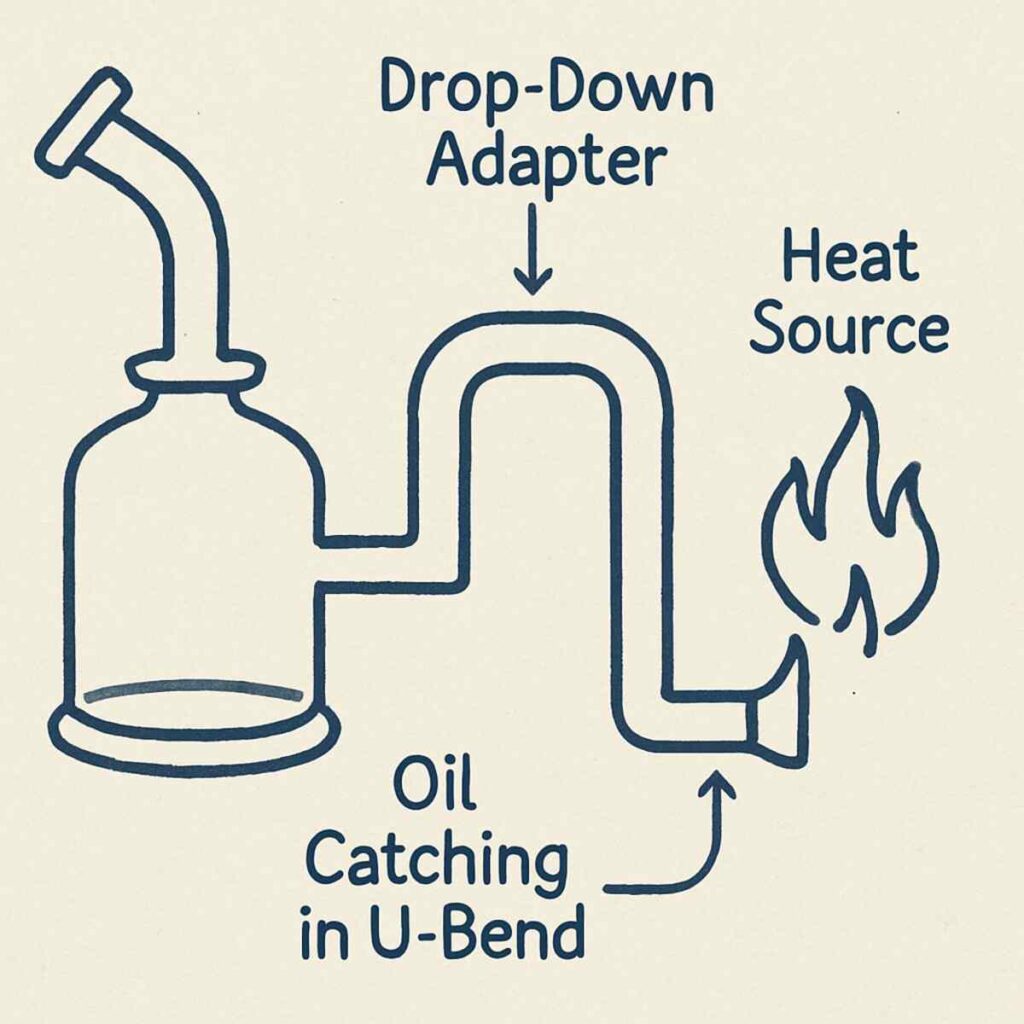
Direct heat compromises the longevity of expensive glass pieces. Repeatedly torching a banger transfers intense thermal energy directly to the connection point of your rig, potentially causing cracks due to rapid expansion and contraction. A primary benefit of a drop down adapter is its role as a sacrificial heat sink. By physically lowering the banger and moving it away from the main pipe, the adapter absorbs the thermal stress, ensuring your setup stays safe during heavy sessions.
![A diagram showing a drop-down adapter moving the heat source away from the main rig and catching oil in the ‘U’ bend.]
These attachments also serve as excellent passive collection tools. The distinctive “U” or “Z” shape creates a natural low point where heavy vapor condenses before traveling into your water chamber. While not as specialized as a dedicated catcher with a removable silicone cup, the deep elbow effectively traps a significant amount of “gold,” keeping your percolators clear. This gravity-fed design simplifies collecting oil from glass rigs, as the reclaim is isolated in a small, accessible accessory.
Once that amber pool accumulates in the elbow of your adapter, retrieving it without a mess requires a bit of physics. Since the drop-down is removable, you can manipulate it using gentle warmth to harvest your stash without solvents.
The ‘Drop’ Method: Solventless Extraction
For purists who want to use their reclaimed oil immediately, manipulating temperature is the most efficient path. Cold reclaim clings to glass, but applying a small amount of thermal energy transforms that solid mass into a free-flowing liquid. By holding your drop-down adapter or banger upside down over a silicone container or parchment paper, you utilize gravity as your primary extraction tool. This is the gold standard for solventless extraction from water pipes, keeping your concentrate chemically pure.
Your torch is the engine of this process, but use it with restraint. Instead of blasting the glass with a high-intensity flame, hold the torch several inches away and use a sweeping back-and-forth motion to gently warm the exterior. Watch for the exact moment the oil begins to slide, similar to melting butter; once it starts moving, stop heating immediately. Using heat to remove sticky buildup requires patience, as overheating can bake the oil onto the glass or degrade the remaining cannabinoids, resulting in a harsh product.
While the heat-drip technique is excellent for harvesting the bulk of your stash quickly, it rarely leaves glass sparkling clean. A thin, sticky film usually remains. For showroom-ready glass or cleaning intricate percolators, you must trade thermal mechanics for chemical dissolution.
The Solvent Solution: ISO Alcohol for Deep Recovery
Torching the main body of a rig is dangerous and can lead to stress cracks. For internal parts, chemistry offers a safer solution. By introducing a solvent, you can dissolve that stubborn golden film into a liquid solution that pours right out. This is the industry standard for cleaning dab rigs without losing product, ensuring every milligram of active oil trapped in your diffusers is harvested.
Use Isopropyl Alcohol (ISO) with a purity of 91% or ideally 99%. Standard 70% rubbing alcohol contains too much water, which repels oil and slows evaporation. High-purity ISO acts like a magnet for cannabis concentrates, stripping the glass clean in minutes. Pour enough ISO into your empty, dry rig to cover the reclaim, cap the openings, and shake gently until the amber residue is fully suspended.
Solvent-based collection demands strict safety protocols:
- Ventilation: Work in a room with an open window or fan; ISO fumes are potent.
- No Flames: Ensure your torch, lighter, and pilot lights are off; alcohol vapor is flammable.
- Check the Label: Use Isopropyl Alcohol, not Denatured alcohol, which contains toxic additives.
Once you have poured the solution into a collection dish, the solvent must be separated from the oil.
From Soupy to Solid: Evaporating Residue
Leaving your collection dish out is the simplest method for solvent removal, letting alcohol evaporate naturally over 24 to 48 hours. While effective, many enthusiasts prefer accelerating the process to ensure every trace of chemical residue is gone. Attempting to use reclaim while it is still runny risks inhaling harsh fumes or igniting the remaining alcohol.
Accelerate evaporation safely using an electric hot plate or a hot water bath. By placing your glass dish on top of a pot of simmering water—creating a makeshift double boiler—the gentle steam heats the glass to drive off the alcohol rapidly without burning the THC. Never use a gas stove or open flame for this step.
Watch for visual cues to identify when the purge is complete. Volatile bubbles will rapidly appear and pop, eventually slowing down until the mixture becomes still and thickens. At this stage, the substance is ready to scrape and save. However, if you notice cloudy white swirls or hear a crackling sound, you are dealing with trapped water.
The Water Problem: Drying Wet Reclaim
Cloudy, milky swirls in your dish indicate an emulsion of water trapped inside the oil. Unlike alcohol, water is stubborn and hazardous during use. When you apply a torch to “wet” reclaim, that trapped moisture instantly turns into steam and expands, causing the oil to splatter violently. This “crackling” can result in hot oil burns and wasted product.
Leaving moisture in your stash also creates a biological risk. Water provides the environment for mold and bacteria to thrive, turning your concentrate into a health hazard. Furthermore, moisture speeds up terpene degradation in used concentrates. Collecting oil from glass rigs is only safe if the final product is completely arid and shelf-stable.
Resolve this by extending the heating process, as water has a higher boiling point than isopropyl alcohol. Keep your container on a low heat source—like a mug warmer—until the mixture turns clear and the surface becomes glass-like with zero bubble activity. Once the popping stops, you are left with fully “activated” oil.
No Stove Required: Reclaim Edibles
Making homemade treats usually involves the time-consuming process of activating your product in an oven. Reclaim bypasses this entirely. When the vapor traveled through your hot banger, that heat instantly decarboxylated the cannabinoids, transforming the sticky fallout into a fully activated ingredient.
You can create “instant infusions” without turning on a stove. While you could eat the oil raw, absorption improves significantly when bound to a saturated fat. Simply warm up a small amount of coconut oil or peanut butter and stir in your collected oil to increase bioavailability. This method turns residue into a bio-available tincture in seconds.
Potency varies, so conservative dosing is essential. Reclaim generally tests between 30% and 60% THC with higher levels of CBN. A “rice-grain” sized glob is the universal starting point. However, you will quickly encounter the distinct, burnt flavor profile that tends to overpower delicate sweets.
The Flavor Challenge: Masking the Taste
While THC survives the banger’s heat, flavor does not. Fresh terpenes evaporate long before vapor condenses back into oil, leaving a bland, sticky substance with a charred, medicinal aftertaste. This can ruin light recipes like sugar cookies.
Culinary success relies on aggressive flavor pairing. Lean into savory or bitter-sweet combinations that stand up to the “hashy” undertones. To effectively mask the flavor, infuse your oil into these heavy-hitters:
- Dark Chocolate: The natural bitterness of 70% cocoa blends with the reclaim taste.
- Peanut Butter: High fat content aids absorption while roasted nut flavor overpowers the oil.
- Cinnamon and Nutmeg: Complex spices distract the palate.
- Strong Coffee: The roasted profile of espresso pairs perfectly with the slightly burnt notes.
Brownies and spicy ginger snaps are classic choices. If your palate is sensitive, bypass your taste buds entirely.
The Capsule Method: Convenient Dosing
Empty gelatin or vegetable cellulose capsules offer a workaround for the taste-sensitive consumer. By transferring your collected oil into these shells, you create an odorless pill, eliminating the need for baking and kitchen cleanup.
For best results, mix the warm reclaim with a small amount of MCT oil or melted coconut oil before filling the capsule. This thins the viscous reclaim for easier handling and provides necessary lipids for your digestive system to uptake the THC. Without this carrier oil, raw reclaim might pass through your system largely undigested.
Once filled, these homemade capsules provide consistent, discreet dosing. Keep a jar in the fridge for sleep aid or pain relief. Remember to start slow, as the combination of pre-activated THC and carrier oil can lead to heavy effects that last for hours.
Strategies for Re-Dabbing and Mixing
Returning reclaimed oil to the banger offers immediate effects, though the flavor will lack the zest of a fresh scoop. It is safe to smoke rig resin—properly identified as reclaim—provided it is free of water and contaminants. To mask the charred taste, try the “stash stretch” technique: mix your collected oil 50/50 with fresh wax. This dilutes the used oil while fresh terpenes mask the flavor.
These recycled concentrates often feel heavier than your initial session. Due to the conversion of THC into CBN, straight dab reclaim acts as a powerful sleep aid. Many users keep a specific jar for this “nighttime blend,” utilizing it as a cost-free solution for insomnia.
Since the original terpenes (natural lubricants) are gone, vapor can feel sharper on the throat. Consume reclaimed oil at the lowest possible temperature to minimize lung irritation and coughing fits.
Zero-Waste Preservation: Storage Best Practices
Selecting the right vessel preserves the integrity of your collected oil. Non-stick silicone jars are great for short-term access, but for long-term storage, terpenes can interact with the silicone, causing leaching. For supplies intended to last longer than a few weeks, use glass jars or parchment paper.
Environment also dictates lifespan. Cannabinoids are sensitive to UV light and heat. Leaving your jar in sunlight or near electronics will degrade it into a sleepy sludge. Treat your reclaim like a fine spice: keep it stable, cool, and dark.
Follow these tips for storage of collected oils:
- Material: Use glass containers for long-term storage to avoid silicone leaching.
- Temperature: Keep below 70°F to maintain consistency.
- Light: Store inside an opaque drawer to block UV rays.
- Humidity: Ensure the container is airtight.
Safety First: Recognizing Spoilage
Even carefully saved jars can harbor dangers if moisture was trapped inside. Because reclaim often sits in a water chamber, it can breed bacteria and mold if not fully dried. Before use, hold the container to a strong light; healthy reclaim looks like dark amber glass. Cloudy swirls or white fuzzy spots indicate contamination and must be discarded.
The “sizzle test” verifies moisture content. Touch a pinhead-sized amount of oil to a heated nail. If it crackles or pops, water is trapped, creating a risk of steam burns. Is it safe to smoke rig resin that behaves this way? No. It must be purged of water first.
Trust your nose. Good reclaim smells like a toasted version of the original strain. A sharp sulfuric odor or mildew scent indicates rot. If a batch fails the eye, ear, or smell test, do not consume it.
Topical Potential: Muscle Rubs and Salves
If a batch passes safety checks but tastes too harsh, repurpose it for topical balms. Reclaim is rich in CBN, making it excellent for localized muscle relaxation rather than a head high.
Transforming sticky oil into a salve is simple. Since the reclaim is already decarboxylated, melt it gently into warm coconut oil, shea butter, or beeswax over low heat. A standard ratio is one gram of reclaim to a quarter-cup of carrier oil. Add peppermint or lavender essential oil to mask the scent.
Applying these rubs to sore areas allows cannabinoids to bind with skin receptors without entering the bloodstream, offering relief without the buzz. This transforms “waste” into a functional part of your self-care routine.
The Environmental Angle: Protecting Your Plumbing
Cannabis concentrates behave aggressively in plumbing. Dab reclaim is hydrophobic; it repels water and clings to dry surfaces. Like hot bacon grease, it flows when warm but solidifies into a concrete-like blockage in cool pipes.
While isopropyl alcohol dissolves buildup in glass, the resulting liquid isn’t necessarily safe for drains. When the alcohol-oil mixture hits standing water, the alcohol separates, and the heavy wax “crashes” out, creating a sticky film that traps debris. Cleaning dab rigs without losing product also means protecting your home infrastructure by collecting the oil rather than flushing it.
Troubleshooting Common Issues
A loud crackle when reheating usually signals trapped moisture or unevaporated alcohol. To fix this, let the silicone container sit open on a gentle heat source for a few hours. Dab reclaim can trap liquid pockets, so patience is key.
Recognize physical changes to decide how to treat the material:
- Too Runny: Heat activation loosened the structure. Fridge-chill for 10 minutes.
- Sizzles: Trapped moisture. Air-dry in a warm, ventilated spot.
- Harsh Taste: Terpenes are gone. Use for edibles or capsules.
The Resourceful Dabber’s Workflow
Shifting your perspective turns rig maintenance from a chore into a harvest. That golden buildup is not dirty sludge, but a resourceful opportunity. You have moved past the misconception that all residue is trash, distinguishing between useless char and potent, activated oil.
Equip your dab rig with reclaim catcher attachments to automate collection. Harvest the oil into a non-stick container before deep cleaning with solvents. Treat this stash as your dedicated supply for edibles or a rainy-day backup.
Embracing these recovery steps allows you to utilize every milligram of product you purchased. By integrating this workflow, you ensure your sessions remain flavorful, your plumbing stays clear, and your inventory goes twice as far.
